The Hidden Crisis in Corporate Sustainability
What happens when sustainability professionals stop talking about carbon credits and start talking about what really matters?

At last week's Net Zero Institute Sustainability 2.0 Summit in Boston, something unexpected emerged from our unconference format. While the agenda promised sessions on GHG protocols, supply chain emissions, and regulatory compliance, the conversations that drew the largest crowds, and sparked the most transformative insights, were fundamentally about something else entirely.
View Summit photos in this highlights gallery.
The Real Challenge Isn't Technical
Here's what we learned by analyzing which sessions attracted the most participants:
Executive buy-in drew the largest crowd by far. Communication strategies came in second. How to get organizations to actually move ranked third. In fact, four of the six most popular sessions all orbited around the same core challenge: How do I get my organization to lean further in on sustainability?
As one participant observed during our closing readout: "We came expecting to debate materiality assessments and CSRD compliance. Instead, we spent the day talking about the human dynamics of change."
The Duality Dilemma
Perhaps the most profound insight came from recognizing what one leader called "the duality we're all living":
On one hand, we're diving deep into nuanced, difficult technical work, like voluntary carbon markets, materiality assessments, and Scope 3 calculations. On the other hand, we're engaged in fundamentally existential battles: How do we keep doing this work at all? How do we hold the line when budgets are being slashed and positions eliminated?
One attendee captured it perfectly: "I ran into an old colleague and asked how they're doing. Their response? 'Well, I'm still employed.'"
And yet, there's a third layer. Even while fighting to keep our jobs and master the technical details, we're simultaneously trying to drive transformational system change.
It's exhausting. And it's exactly why we need each other.

The Communication Breakthrough
Multiple sessions converged on a revelation about stakeholder engagement that challenges conventional sustainability communications:
There is no single message that works.
As one participant synthesized: "You have to literally understand who you're talking to, what they're concerned about, what their language is. We can't make the change happen that needs to happen unless we can connect to issues that people are already concerned about."
This insight extended beyond external communications into internal change management. The most effective practitioners aren't those who lecture about climate science or sustainability imperatives. They're the ones who:
- Start with empathy
- Connect sustainability to people's existing concerns and incentives
- Create small wins and "dopamine hits" along the journey
- Build relationships before asking for commitments
- Meet people where they are, not where we wish they were
The Supply Chain Revelation
In the supplier engagement session, one attendee representing the supplier perspective delivered a disarmingly honest insight: "I'm more inclined to answer your survey if I like you as a person."
That simple statement unlocked a broader truth: Sustainability happens through people working with people. Data requests, compliance frameworks, and procurement requirements matter, but the relationships underneath them matter more.
Understanding different perspectives, making work relevant to people's actual jobs, being kind, these "soft skills" often determine whether sustainability initiatives succeed or stall.

The Physical Risk Gap That Should Alarm Every CFO
Buried in our transition planning discussions was a data point that deserves far more attention:
The Norwegian sovereign wealth fund uses contemporary Earth system science projecting a 30-40% decline in global GDP before 2100 in high-temperature scenarios. Meanwhile, most corporate sustainability teams use models (like the DICE model) that assume only a 3% GDP decline at similar temperatures.
That's not a rounding error. It's orders of magnitude different. And it fundamentally changes every scenario planning exercise, every risk assessment, every investment decision.
As one participant noted: "The corporates have it wrong by orders of magnitude, while the public sector has it much more right."
This gap between corporate risk models and current climate science represents both a massive liability and, for those who recognize it, a significant competitive advantage.

The Unexpected Optimism
Despite the existential challenges, something remarkable emerged throughout the day: practical optimism grounded in human capability.
"We're humans and we're social beings," observed an educator new to the corporate sustainability space. "These soft skills, empathy, invitation, connection, these are things we can do. We just need to remember that's what we need to do."
Another theme: celebrating small wins, both for ourselves and others. One participant shared getting three random roommates from Facebook to compost religiously. "Let's remember those small wins," they urged. "They might make the tough work easier if we give ourselves those little wins."
The conversation even turned creative: What if we created a comedy show about sustainability? What if we made movies depicting positive climate futures without overdramatizing? What if we designed systems that gave people small dopamine hits for sustainable choices, like a recycling bin with a screen showing fireworks every time someone uses it correctly?
The Talent Signal
Walking around the room revealed something significant about the current state of corporate sustainability: a striking number of independent consultants and fractional leaders.
"There's so much talent looking for a place to be deployed," one observer noted. "It feels like a strong indicator of the specific stage we're at. And maybe a reminder that we have so many allies who haven't been forced into sustainability-specific jobs. How do we get those allies to join us?"
This isn't just about employment trends. It suggests an industry still coalescing, still finding its organizational models, still figuring out how to deploy expertise most effectively. For leaders thinking about organizational design and resource allocation, this represents both challenge and opportunity.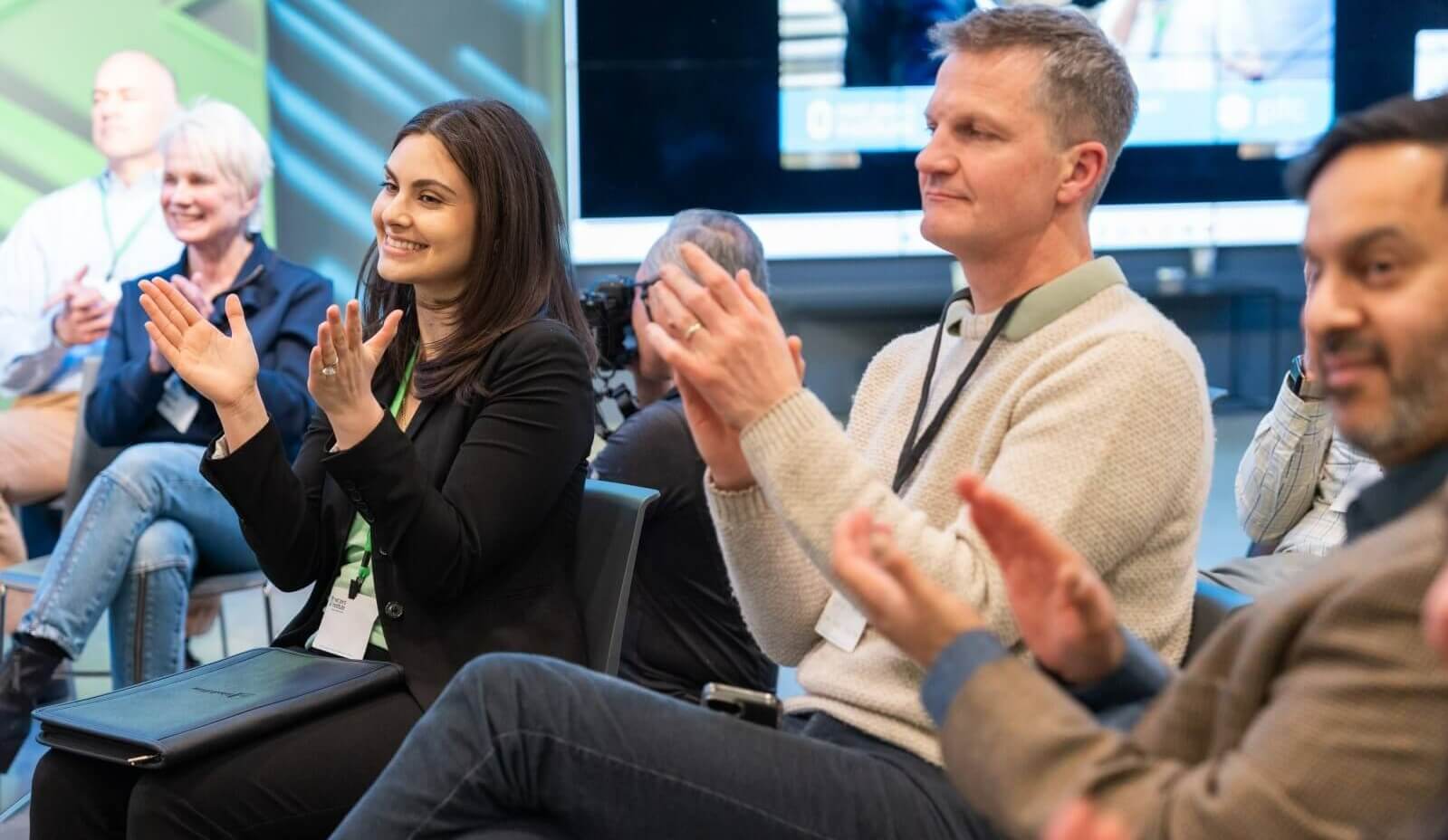
The Transformation Imperative
In our closing circle, one voice cut through: "Don't be afraid of the transformation, because that is what we need. It's also where the real value can come from. We have a real opportunity not to just go around the edges, but to fundamentally change the way we do business and how we build our products. That can be better for our customers, better for our companies, and better for the environment."
"It is a hard time to be thinking ambitiously," they continued. "But that is where the real power is. I want to encourage everybody to stay just as ambitious, get more ambitious, and don't let the current challenges diminish your work."
What Made It Work
The unconference format proved its value once again. By putting the expertise in the room rather than on a stage, by letting conversations flow organically, by trusting that the right topics would emerge, we created space for the conversations people actually needed to have.
Representative Tram Nguyen, Chair of the Massachusetts House Committee on Climate Action and Sustainability, framed it perfectly in her opening remarks: "We need all hands on deck for sustainability to work... When business, government, and community move in the same direction, we unlock a level of progress none of us can achieve on our own."

The Virtual Sessions Continue
Based on the session popularity data, we're launching monthly virtual meetups starting in January. We'll tackle the themes that resonated most: executive buy-in, effective communication, organizational transformation, and the human dynamics of sustainability work.
Because as one participant reminded us: "The Net Zero Institute is a local organization. Let's keep these conversations going." And that is precisely what we are planning. Stay tuned for virtual sessions where we can continue these personal conversations in the new year!
Tom Hopcroft is Founder and CEO of the Net Zero Institute, a nonprofit business trade organization focused on accelerating the corporate transition to a net zero economy.