Getting Executive Buy-In for Decarbonization: Insights from the Frontlines
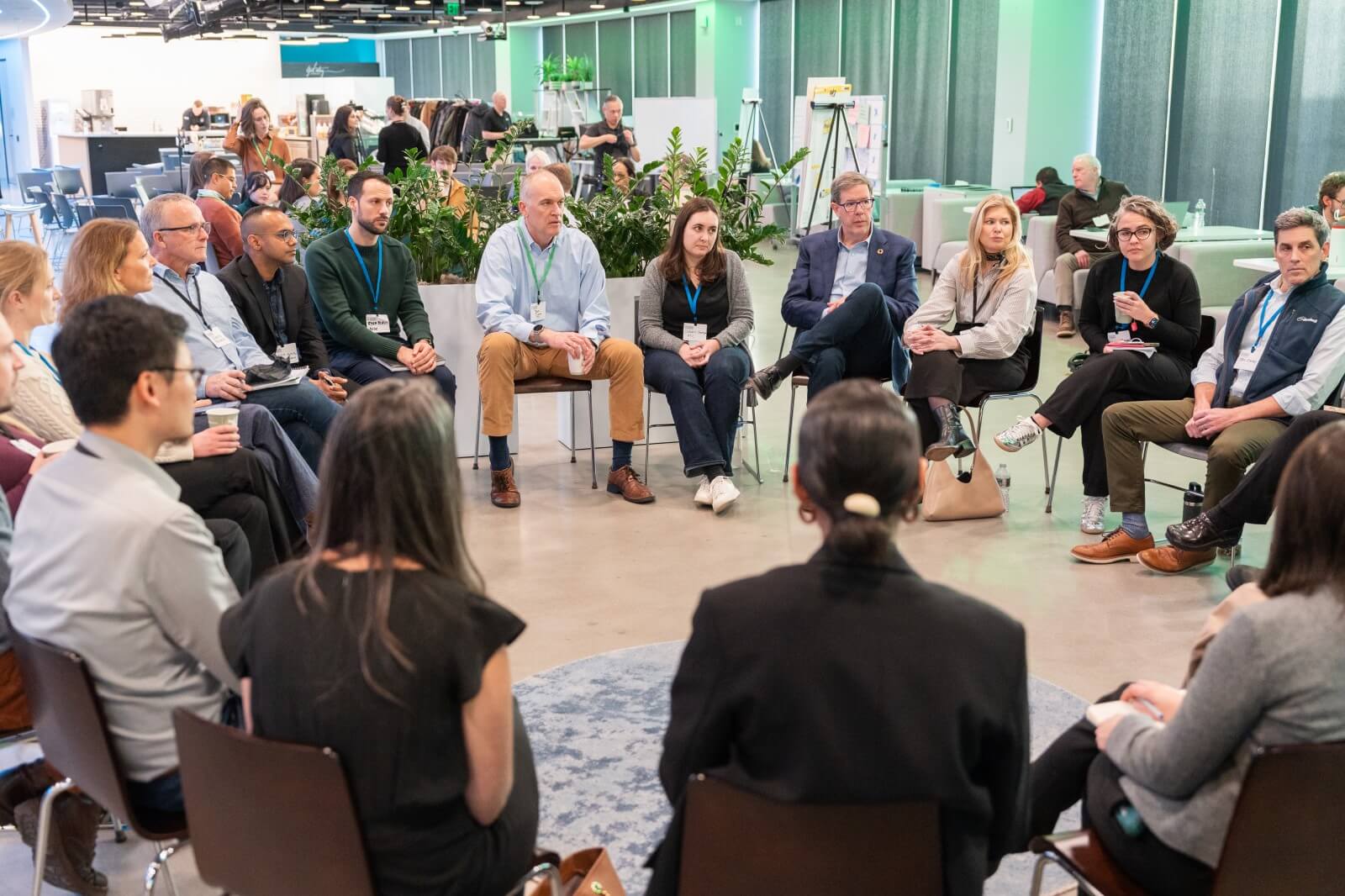
At our recent Impact Lab session, a continuation of the discussions from our Sustainability 2.0 Unconference, we tackled what turned out to be the most popular topic from that event: executive buy-in for corporate decarbonization efforts. The overwhelming interest in this "soft skills" challenge, rather than technical implementation questions, revealed something important about where many organizations find themselves stuck.
The Current Landscape: Adaptation and Resilience
The conversation began by acknowledging the elephant in the room: the shifting political and cultural landscape around sustainability. Many participants noted an increase in client inquiries about whether to change messaging or pull back on commitments. However, a consistent theme emerged: organizations that have already invested in sustainability infrastructure and set goals are largely staying the course.
"We're here for the long run," seemed to be the prevailing attitude among established sustainability teams. For these organizations, particularly those on their fifth or sixth annual report, the work has become embedded in KPIs and operational processes. It's simply what they do.
That said, the language is evolving. "Resilience" is replacing "ESG" in many corporate communications, while "inclusion" is supplanting "DEI." Companies are taking lightning rods down while continuing the substantive work. This linguistic shift reflects a pragmatic approach: maintain momentum while reducing political friction.
What Actually Drives Action?
Our discussion revealed that executive buy-in rarely stems from pure ideology. Instead, several concrete drivers emerged:
- Customer Demand Through the Sales Channel
The most powerful driver? When an RFP arrives with sustainability requirements. Sales teams have direct access to CEOs, and the prospect of losing a significant contract, or winning one through differentiation, gets immediate attention. Multiple participants shared stories of companies suddenly prioritizing sustainability when faced with detailed ESG questionnaires from major clients, including unexpected sources like oil and gas companies requiring comprehensive sustainability data from their suppliers. - Regulatory Pressure (Even When Delayed)
California's SB 253, despite legal challenges and stays, spurred action among many companies who decided to move forward anyway. The reasoning was simple: "It's coming at some point." For organizations with century-long time horizons, administrations change, but the trajectory toward disclosure requirements remains clear. - Investor Requirements
Private equity firms and their portfolio companies increasingly face sustainability requirements from limited partners. The motivation may be pragmatic (securing that next $500 million check from a Norwegian fund) but the result is the same: action gets greenlit. - Competitive Positioning
While less common as an initial driver, competitive advantage can motivate early movers, particularly when they can differentiate themselves in crowded markets.
Getting Companies on the Treadmill
A critical insight from the discussion: it matters less why companies start sustainability work than that they start. Once organizations begin measuring, a natural competitive psychology takes over. Type A executives who see their company earning a "C grade" on any metric immediately want to improve to an "A."
This phenomenon underscores the value of materiality assessments and initial measurement. The data collection process itself often reveals operational insights. One participant described a CFO discovering through ESG reporting that 20% of the company was flying first class, with no prior awareness of the spending level. The sustainability work suddenly had tangible business value beyond its environmental impact.
The Well-Run Company Indicator
Here's a useful heuristic: companies that can easily compile their ESG data tend to be well-run organizations overall. They have systems in place, understand how their business operates, and can access information across their operations. Conversely, companies that struggle with basic ESG data collection often reveal broader organizational challenges: undocumented offices, disconnected systems, or poor financial controls.
This makes ESG reporting valuable beyond its stated purpose: it's a diagnostic tool for organizational health.
Effective Strategies for Securing Buy-In
- Present Options, Not Prescriptions
Executives resist being told what to do, but they value having choices informed by peer examples and data. Rather than recommending a single path, present feasibility studies, comparative analyses, and multiple scenarios. This preserves executive agency while providing the information needed for informed decision-making. - Leverage Peer Learning
CEOs face unique challenges that board members, staff, and even family often can't understand. Peer-to-peer learning (seeing how others in similar positions have handled comparable situations) provides valuable perspective without triggering resistance to being "taught." - Frame Around Stewardship
The concept of stewardship resonates across business and nonprofit sectors. It implies responsibility not just for immediate results but for the long-term health of the organization. This framing can bridge the gap between short-term financial pressures and long-term sustainability needs. - Focus Relentlessly on Business Value
Sustainability initiatives that succeed tie directly to business imperatives: customer retention, supplier scorecards, talent attraction, operational efficiency, or risk management. The business case should be explicit, not assumed. - Address the Time Frame Question
The stock market operates in seconds and days; sustainability operates in years and decades. Organizations need frameworks for thinking about different time horizons. For some, this means calculating the net present value of energy efficiency investments. For others, it means considering what assets or capabilities they're creating for their organization's next chapter.
The Shareholder Value Paradox
A frank observation emerged about the tension between stated corporate values and operational reality. Business schools teach leaders that their primary obligation is increasing shareholder value. Employees may hold deeper values around sustainability, and companies support those values because doing so aids recruitment, retention, and ultimately, shareholder value.
This isn't necessarily cynical; it's structural. The challenge for sustainability leaders is working within this framework rather than against it. When sustainability initiatives can be credibly linked to shareholder value (through customer demand, operational efficiency, risk mitigation, or talent management) they gain traction.
Integration vs. Compliance
Perhaps the most important distinction raised: is sustainability integrated into business operations, or is it a compliance exercise that happens once annually?
When sustainability sits in an isolated team that produces an annual report to satisfy external requirements, it remains peripheral. When sustainability considerations inform product development, supply chain decisions, capital investments, and strategic planning, it becomes central to how the business operates.
Moving from the former to the latter requires change management, not just project management. It means helping every function (from R&D to procurement to marketing) understand their role in sustainability outcomes and how their work connects to broader goals.
The Materiality Foundation
Materiality assessments (identifying which sustainability issues genuinely matter to a specific business) provide the foundation for prioritization. No company can address every sustainability challenge simultaneously. Focusing on issues that align with stakeholder concerns, business risks, and competitive positioning makes the work manageable and strategic.
Looking Forward
As more companies undertake decarbonization efforts, the pool of organizations still at the starting line continues to grow. Mid-sized companies and those in sectors slower to adopt sustainability practices represent the next wave. For these organizations, the strategies discussed (business value focus, peer learning, executive agency, and stewardship framing) will be essential for gaining momentum.
The path to executive buy-in isn't about convincing leaders to care about sustainability for its own sake. It's about helping them see sustainability as integral to running a successful, resilient, future-ready business. When that connection becomes clear, the work can begin in earnest.
________________________________________
The Net Zero Institute's Impact Labs bring together sustainability practitioners, consultants, and corporate leaders to share insights and strategies for accelerating the transition to net zero. To learn more about upcoming sessions or to join our community, visit www.netzero-institute.org.